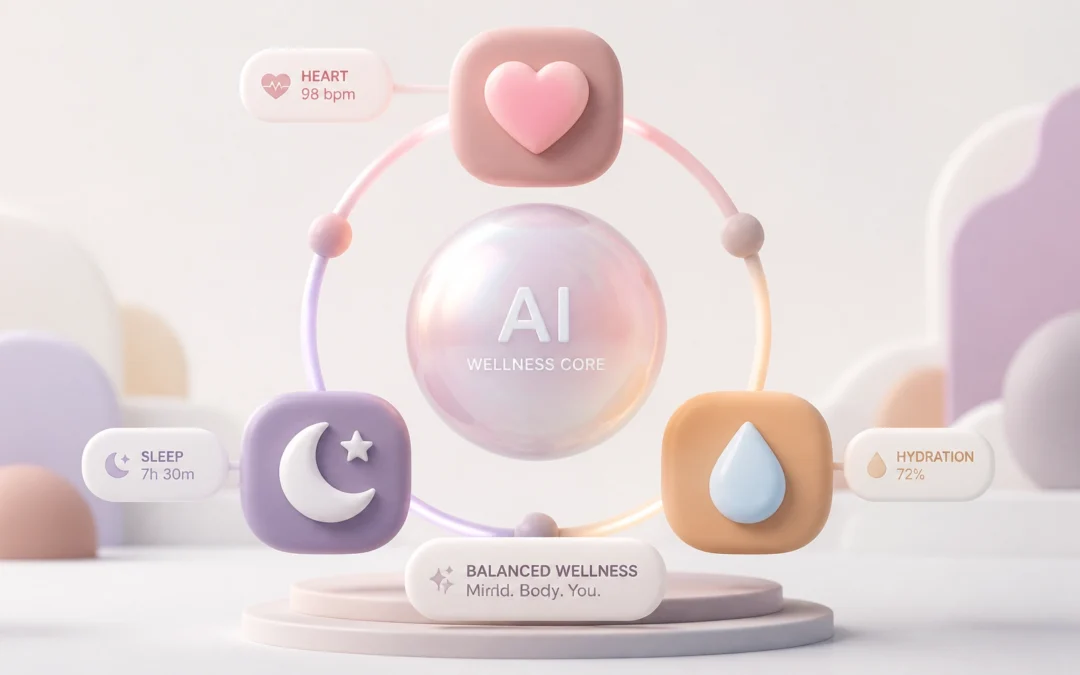
Status of Personalized Wellness Integration
The current landscape of individual health management is undergoing a systematic shift from static, generalized guidelines to dynamic, data-driven frameworks. A personalized wellness plan is no longer a fixed document but a responsive protocol that adjusts based on continuous biometric feedback. The integration of Artificial Intelligence (AI) into this process facilitates a level of precision previously unattainable through manual monitoring.
Artificial Intelligence health coaching functions as a centralized processing unit for multifaceted health data. By synthesizing information from diverse sources such as sleep cycles, nutritional intake, and physical activity levels, these systems generate optimized wellness strategies. The traditional reliance on periodic consultations is being superseded by automated, real-time oversight.
Automated Data Synthesis and Analysis
The primary function of an AI health coach involves the aggregation and interpretation of high-volume data streams. Traditional wellness plans often fail due to fragmented information; however, an AI-enabled system consolidates these data points to provide a comprehensive health status.

Objective Metric Evaluation
Systematic evaluation of metrics is performed through advanced algorithms that eliminate human bias. Information regarding heart rate variability (HRV), caloric expenditure, and sleep latency is analyzed to identify underlying patterns. When anomalies are detected, the system initiates corrective protocols. This ensures that the wellness plan remains aligned with the physiological requirements of the user at any given moment.
For individuals utilizing platforms like Wholistic Wellness Tracker, the AI functionality serves to bridge the gap between raw data and actionable instructions. The transition from observation to implementation is automated, reducing the cognitive load on the individual and increasing the probability of protocol adherence.
Real-Time Adaptation of Wellness Protocols
A static wellness plan is inherently limited by its inability to account for environmental and physiological fluctuations. System states are constantly monitored by AI health coaches to ensure that recommendations remain relevant. If a decrease in recovery quality is detected via sleep tracking, the activity parameters for the subsequent day are automatically refined.
Dynamic Adjustment Mechanism
The adaptation process is characterized by several key technical phases:
- Data Acquisition: Continuous monitoring via wearable devices and manual inputs.
- Pattern Recognition: Identification of deviations from the established baseline.
- Instruction Refinement: Updating the nutrition, activity, or mindfulness modules.
- Notification Delivery: Transmission of adjusted instructions to the user.
This cyclical process ensures that the personalized wellness plan is optimized for the current state of the organism. This level of responsiveness is essential for long-term health maintenance and peak performance optimization.

Constant Technical Accessibility and Support
Human coaching is restricted by temporal and geographic limitations. In contrast, AI health coaching operates on a 24/7 availability status. This ensures that support is accessible at the exact moment it is requested, regardless of the time zone or hour.
System interactions are designed to be immediate. Whether a user requires a nutritional adjustment at midnight or a guided meditation protocol during a period of high stress, the AI coach provides instantaneous assistance. This constant state of readiness is a critical factor in maintaining the momentum of a wellness journey.
Scalability of Personalized Guidance
AI systems allow for the scaling of personalized guidance to a global population. The costs associated with individual human coaching are often prohibitive for many; AI provides a cost-effective alternative that does not compromise the specificity of the advice. Every user receives a plan that is uniquely tailored to their specific biological and lifestyle requirements.
Nutritional Optimization and Behavioral Analysis
Nutrition is a fundamental pillar of any wellness framework. An AI health coach streamlines the management of dietary intake by providing precise macronutrient and micronutrient targets. These targets are not static; they are adjusted based on the individual's activity levels and health goals.

Systematic Meal Planning
The generation of meal plans is conducted through a database-driven approach. AI systems scan extensive recipe libraries to identify options that meet the specific nutritional criteria of the user. This minimizes the risk of dietary non-compliance by providing options that are both nutritionally sound and personally preferred.
Furthermore, behavioral analysis tools within the AI framework identify triggers for non-compliant behaviors. By tracking mood and stress levels in conjunction with dietary logs, the system can predict periods of high risk and deploy preventative strategies, such as guided mindfulness exercises or hydration reminders.
Implementation of AI-Driven Wellness Strategies
To transition to an AI-supported personalized wellness plan, the following steps must be executed:
- Locate a Comprehensive Platform: Select a technical solution that integrates nutrition, activity, sleep, and mindfulness tracking into a single interface.
- Initialize Data Synchronization: Connect all wearable devices and third-party health applications to the central AI coach.
- Establish Baseline Metrics: Complete the initial assessment phase, including physical statistics, dietary preferences, and wellness objectives.
- Monitor Automated Updates: Regularly review the refined instructions provided by the AI coach.
- Engage with AI Coaching Features: Utilize the 24/7 chat functionality for immediate protocol adjustments and technical questions.
The execution of these steps facilitates the creation of a robust and flexible wellness infrastructure.

Community Integration and Social Data
While individual tracking is paramount, the inclusion of social data enhances the effectiveness of the wellness plan. Group challenges and leaderboards provide external validation and motivation. The AI system manages these social interactions, ensuring that community features are utilized to support the individual’s goals rather than distract from them.
Data sharing within a secure community environment allows for the identification of successful strategies among peer groups. The AI coach can then suggest these proven methods to individual users, further refining the personalization process through collective intelligence.
Conclusion: The Automated Future of Health
The utilization of AI health coaching represents the most efficient method for building and maintaining a personalized wellness plan. Through automated data synthesis, real-time adaptation, and constant accessibility, these systems provide a level of support that exceeds traditional methodologies. Adopting these technical solutions is a required step for individuals seeking to optimize their holistic health in a complex, data-rich environment.
The status of the personalized wellness plan is currently: Optimized and Operational.