
Meta description: Discover how your AI health coach learns from your sleep, activity, nutrition, and mood data to build a personalized wellness plan that adapts to you.
Why personalized coaching feels different
If generic wellness advice has ever left you wondering, “But will this actually work for me?” you’re not alone. That’s exactly where an ai health coach app can make a real difference.
Instead of giving you the same recommendations it gives everyone else, your AI Coach looks at the patterns in your own daily life. In a holistic wellness app like Wholistic Wellness Tracker, that means your sleep, activity, nutrition, and mood can all work together to shape a personalized wellness plan that fits your reality.
The goal is simple: help you better understand what supports your mental and physical wellness, and make it easier to build habits that last.
How your AI Coach learns from your daily data
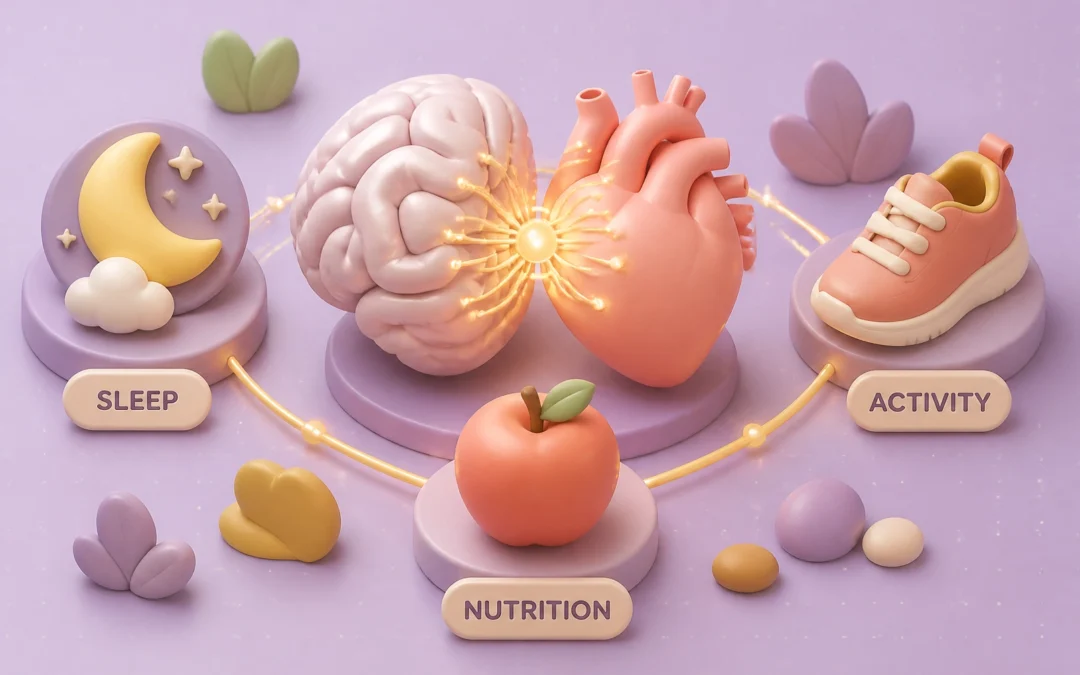
Your AI Coach gets smarter when it can see the full picture. Rather than focusing on one metric in isolation, it learns from multiple signals across your day.
What it tracks
Your healthy lifestyle tracker may include:
- Sleep duration and sleep quality
- Daily movement, workouts, and step count
- Nutrition logs, hydration, and meal patterns
- Mood check-ins, stress levels, and journal entries
- Recovery signals from connected wearables, such as heart rate or HRV
Why combining data matters
Looking at these signals together can reveal patterns that are easy to miss on your own. For example:
- Poor sleep may be followed by lower energy, more cravings, or reduced motivation to exercise
- Intense workouts may improve mood for some people but increase fatigue for others
- Skipping meals may affect focus, stress, or evening overeating
- Higher stress may show up alongside disrupted sleep or lower recovery scores
This connected view is what helps create a more useful personalized wellness plan instead of one-size-fits-all advice.

How patterns turn into personalized recommendations
The real value of an ai health coach app is not just in collecting data. It is in learning what your data means for you.
Pattern recognition in everyday life
As you log consistently, the system can begin identifying trends such as:
- Better sleep on days when you move your body earlier
- Lower energy after inconsistent meals
- Improved mood when mindfulness sessions are completed regularly
- Slower recovery after several high-intensity days in a row
These kinds of patterns are supported by a broad body of health research. Sleep, physical activity, nutrition quality, and stress management are all strongly linked to long-term health outcomes, daily energy, and emotional wellbeing. The useful part is seeing how those relationships show up in your life, not just in the general population.
What your AI Coach may do with those insights
Based on your patterns, your coach may suggest that you:
- Scale back workout intensity after a poor night of sleep
- Add a short meditation during high-stress periods
- Improve meal timing to support steadier energy
- Prioritize recovery when your body shows signs of strain
- Stay consistent with habits that appear to support better mood and sleep
For more on common tracking challenges, see why your healthy lifestyle tracker may require adjustment.
Why mental and physical wellness should work together
Real wellness is rarely just about workouts or just about mindset. Your physical state affects your mood, and your mental state affects your energy, sleep, motivation, and recovery. That’s why mental and physical wellness need to be viewed as connected.
Stress, mood, and recovery are linked
When stress is high, several things often happen at once:
- Sleep can become lighter or more disrupted
- Recovery may feel slower
- Motivation for healthy habits may drop
- Cravings and emotional eating may increase
A strong holistic wellness app helps connect those dots. If your logged mood, recovery data, and sleep trends suggest that you’re under strain, your AI Coach can guide you toward more supportive next steps instead of pushing harder.
Sleep is often the foundation
Research consistently shows that sleep plays a central role in recovery, cognitive function, mood regulation, and exercise performance. When sleep is off, everything else tends to feel harder.
That’s why your AI Coach may treat sleep as a key decision-making signal when building your personalized wellness plan. After a rough night, the better recommendation might be:
- A lighter workout
- More hydration
- Earlier meals
- A calming meditation
- A stronger focus on recovery habits
For a deeper look, read why quality sleep is the missing link in your mental and physical wellness routine.

How your wellness plan adapts with you
One of the biggest benefits of an ai health coach app is that it can adjust as your life changes. Your needs are not the same every day, so your plan should not be static either.
What adaptation can look like
Your AI Coach may help adjust recommendations based on:
- Last night’s sleep and current recovery status
- The intensity of recent workouts
- Your current mood and stress level
- Changes in routine, schedule, or available time
- The nutrition and hydration patterns you’ve logged
A simple example
Let’s say your original plan included a hard workout. But then:
- Your sleep was shorter than usual
- Your recovery signals dropped
- Your mood check-in suggested higher stress
Instead of insisting on the original plan, your AI Coach may recommend:
- A walk instead of intense training
- A short mindfulness session
- More balanced meals during the day
- A stronger focus on rest that evening
That flexibility is part of what makes a personalized wellness plan feel supportive and sustainable.
To learn more about refining a personalized wellness plan, explore the full guide.
How to help your AI Coach give you better guidance
You do not need perfect data to get value from your coach. But consistent input helps the system learn faster and give more relevant support.
Best practices for better coaching
To help your healthy lifestyle tracker work well, try to:
- Log meals with reasonable consistency
- Record mood or stress check-ins regularly
- Sync wearables if you use them
- Review your trends instead of focusing on a single day
- Notice which recommendations feel realistic and helpful
Actionable advice you can use this week
If you want better results from your holistic wellness app, start here:
- Track the same core habits for 7 to 14 days before judging results
- Pick one area to improve first: sleep, nutrition, movement, or stress
- Use short journal entries to note energy, mood, and recovery
- Look for patterns, not perfection
- Make small adjustments based on what your data shows
For example, if your energy dips every afternoon, check whether your sleep, lunch quality, hydration, and activity patterns line up. That is often where useful insight begins.
Your data and privacy still matter
Personalization only works when trust is protected. Health data should be handled carefully, and privacy controls should be clear.
What secure wellness tracking should include
A trustworthy system should support:
- Encrypted data transmission
- Strong account protections
- Clear sharing permissions
- Anonymized or protected model-training processes where applicable
That means you can focus on learning from your data while staying informed about how it is handled.

The bottom line
Your AI Coach is not guessing. It is learning from the signals you share over time so it can better understand what supports your energy, recovery, habits, and overall mental and physical wellness.
When your sleep, nutrition, movement, and mood are viewed together, your ai health coach app can build a personalized wellness plan that feels more relevant, flexible, and useful in daily life. That is the real power of a holistic wellness app: helping you connect the dots and make decisions that support your whole self.
Ready to help your AI Coach learn what works best for you?
Log your progress in the Wholistic Wellness Tracker app so your AI Coach can keep learning what supports your body, your mind, and your routine best.