
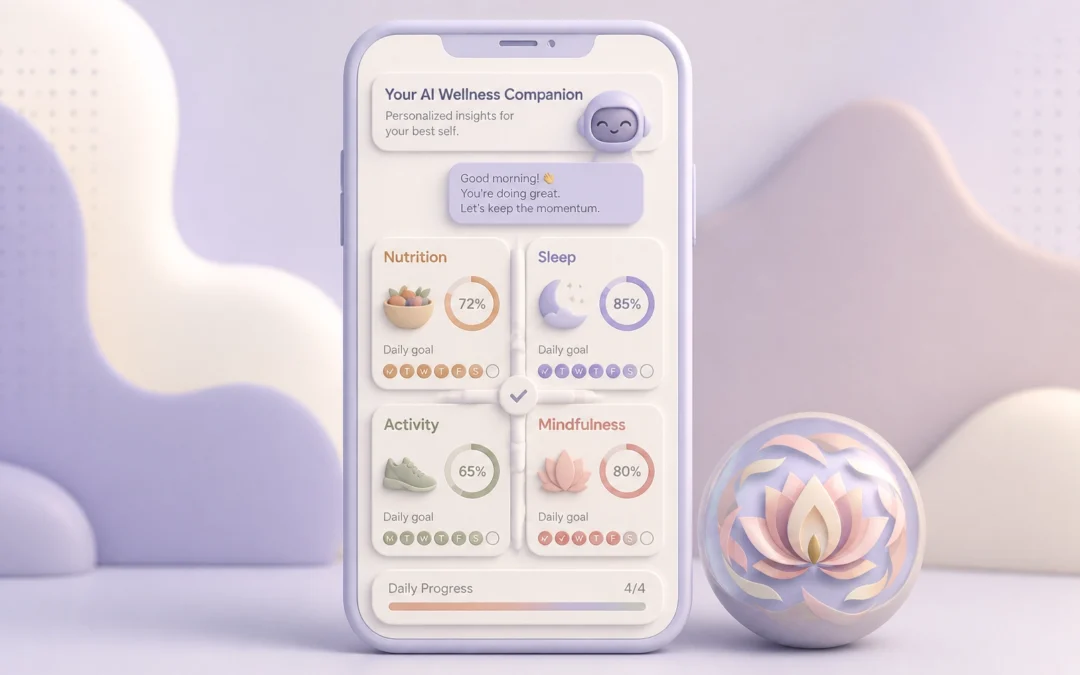
Generic wellness advice is easy to find. Eat better. Sleep more. Exercise regularly. Meditate daily.
The challenge is knowing what those recommendations mean for your schedule, energy, preferences, and current habits. A plan may look reasonable on paper but become difficult to follow when work runs late, sleep is disrupted, or motivation changes.
An AI health coach app offers a more practical approach. Instead of treating wellness as a fixed checklist, it can use your daily information to create and refine a personalized wellness plan. The result is guidance that is more specific, more flexible, and easier to apply in real life.
What Makes an AI Health Coach App Different?
A traditional wellness plan often starts with a broad goal. You may want to improve your energy, reduce stress, become more active, or create a better evening routine. Turning that goal into daily action requires many decisions:
- What should be changed first?
- How much activity is realistic today?
- Is low energy caused by poor sleep, skipped meals, or stress?
- Should the plan be adjusted after a difficult day?
- What should happen when a habit is missed?
An AI health coach app helps reduce this decision fatigue. It brings relevant information into one place, identifies patterns, and translates broad goals into manageable next steps.
Research supports the potential of digital coaching. A 2025 systematic review published in Frontiers in Digital Health found that human, AI, and hybrid coaching models were generally feasible and acceptable for supporting lifestyle behaviors. The review also reported positive trends in engagement and lifestyle outcomes, while noting that more research is needed to standardize how these tools are evaluated. Read the systematic review.
One Plan Built From Multiple Wellness Inputs
Wellness areas are connected. Sleep can influence food choices. Stress can affect activity levels. Physical movement can support mood. A useful plan needs to account for these relationships rather than treating each category separately.
An AI coach can analyze information across several areas.
Nutrition
Nutrition tracking can reveal patterns such as skipped breakfasts, inconsistent meal timing, frequent afternoon snacking, or low hydration. The goal is not necessarily to impose a strict diet. Instead, the system can help identify one practical adjustment.
For example, if afternoon energy drops frequently after a short night of sleep, the next recommendation may focus on preparing a balanced snack rather than restricting food. If meals are regularly skipped during busy workdays, the plan may suggest a simple recipe from the Wholistic Wellness Tracker recipe library that can be prepared in advance.
Sleep and recovery
Sleep data can show bedtime variability, short sleep duration, or an inconsistent wind-down routine. These patterns may explain why a demanding workout or complex morning routine feels difficult.
A personalized plan could respond with a smaller action, such as beginning a five-minute evening wind-down routine or setting a more consistent bedtime target. Sleep recommendations should support recovery, not create another source of pressure.
Activity
Activity information may include steps, workouts, movement breaks, or time spent sitting. An AI coach can compare current activity with previous patterns and suggest a realistic next step.
If a 10,000-step target is not practical, the recommendation may be a 10-minute walk after lunch. If activity levels have increased consistently, the plan may gradually introduce a longer walk, another movement break, or a new workout option.
Mindfulness and mood
Mindfulness sessions and journal entries provide context that activity and nutrition data cannot show alone. A short meditation or mood reflection can help identify stressful times of day, recurring barriers, or routines that support better focus.
When stress is elevated, the next action may be a brief breathing exercise rather than an intense workout. The guided mindfulness techniques on Wholistic Wellness Tracker can provide additional options for short practices.

How AI Removes Guesswork From Your Day
A personalized wellness plan becomes useful when it answers the question: “What is the best next step for today?”
Without support, that decision can require significant mental effort. You may spend time searching for workouts, comparing meal plans, reviewing sleep advice, or deciding which habit deserves attention. That effort can make wellness feel complicated before any action begins.
An AI coach simplifies the process by using your goals and logged information to prioritize. Instead of presenting ten possible changes, it may suggest one or two actions that fit your current situation.
A typical daily coaching cycle might look like this:
- Review: Your recent nutrition, sleep, activity, mindfulness, and journal information is considered.
- Identify: A recurring pattern or immediate barrier is highlighted.
- Recommend: A specific action is suggested.
- Track: The action is logged as completed, adjusted, or skipped.
- Refine: Future recommendations are updated based on what happened.
This process helps turn general knowledge into a practical routine.
24/7 Availability Adds Consistency
Human coaches offer valuable expertise, accountability, and personal connection. However, appointments are usually scheduled at specific times. A question that appears late at night or during a busy afternoon may need to wait.
An AI health coach app is available whenever guidance is needed. It can support a morning planning session, a lunchtime movement decision, or an evening review. This availability is especially useful when routines change from day to day.
The benefit is not that AI replaces every role of a human coach. Human professionals remain important for complex health needs, clinical concerns, and deeper personal support. Instead, AI provides an accessible layer of day-to-day guidance between appointments or for people who need a flexible starting point.
The 2026 Stanford report on the Bloom research prototype also highlights an important design principle: effective AI coaching should support autonomy rather than simply prescribe instructions. Read the Stanford report. A good coach helps users understand their options and build confidence in their own decisions.
Real-Time Adaptation Prevents All-or-Nothing Thinking
Static plans often fail when life changes. A demanding workday, travel, illness, poor sleep, or family responsibility can make the original plan unrealistic.
An adaptive AI coach can respond to those changes. If sleep was limited, the activity recommendation may be reduced. If a planned workout was missed, the system can help identify a smaller alternative instead of treating the day as lost. If a meditation routine is consistently skipped in the morning, the timing can be moved to the evening.
This flexibility matters because consistency does not require identical performance every day. It requires continuing to participate in the process.

Practical Examples of Personalized Coaching
Consider how the same wellness goal can produce different recommendations for different people.
Example 1: Improving energy
A generic plan may recommend more exercise and fewer processed foods.
A personalized plan may identify that energy is lowest on days with short sleep and skipped breakfast. The next steps could be:
- Log breakfast for the next three mornings.
- Select a simple protein-rich recipe.
- Move bedtime 15 minutes earlier.
- Take a short walk after lunch.
Example 2: Reducing evening stress
A generic plan may recommend daily meditation.
A personalized plan may show that stress increases before late meetings and that longer meditations are rarely completed. The AI coach may suggest:
- Complete a two-minute breathing exercise before the meeting.
- Use a five-minute guided meditation after work.
- Record mood in the Journal before bed.
- Review whether the shorter practice was easier to maintain.
Example 3: Building an activity routine
A generic plan may set a demanding step target.
A personalized plan may show that movement is more consistent on days with scheduled breaks. The next recommendation could be a five-minute walk after lunch and a standing reminder during the afternoon. Once this becomes consistent, the target can be gradually refined.
Data-Based Motivation Feels More Supportive
A plan based on personal data can feel motivating because progress is measured against an individual starting point. The focus shifts from meeting an arbitrary ideal to understanding what is improving.
If sleep consistency has increased, that progress matters. If a short meditation was completed three times this week, that creates useful momentum. If a meal was logged despite a busy day, the action contributes to a clearer picture of personal habits.
This approach also makes missed habits informative. A skipped action may indicate that the timing, difficulty, or format needs to change. The solution is not to apply more pressure. It is to refine the plan.
Community features can add another layer of support. Group challenges and leaderboards in the Wholistic Wellness Tracker can provide accountability while keeping attention on participation and progress rather than perfection.

How to Start Using a Personalized Wellness Plan
Begin with accurate, manageable information. There is no need to create a perfect record on the first day.
- Choose one primary goal. Select better sleep, more energy, improved activity, balanced nutrition, or stress management.
- Log daily information. Record meals, movement, sleep, mindfulness sessions, and mood as consistently as possible.
- Review patterns instead of isolated days. Several days of information provide more useful context than one result.
- Follow one recommended action. Start with the smallest step that fits the current schedule.
- Refine after several days. Note what was completed, what was difficult, and what should be adjusted.
- Use support features. Explore guided meditations, recipes, wellness courses, group challenges, and the AI Coach.
For a structured starting point, review how to create a personalized wellness plan in five minutes.
Turn Your Plan Into a Routine With Wholistic Wellness Tracker
A personalized wellness plan should function as a daily guide, not a rigid set of rules. By connecting nutrition, sleep, activity, mindfulness, journaling, and progress data, an AI health coach app can help make each next step clearer.
Start by logging today’s meals, movement, sleep, or mood in the Wholistic Wellness Tracker. Use the information to identify one practical action, then return tomorrow to continue refining the plan. Small, informed actions can create a routine that is more realistic, flexible, and sustainable over time.
This article is for general wellness information and does not replace medical advice, diagnosis, or treatment. Consult a qualified healthcare professional for individual medical concerns.