
Meta description: Discover five-minute mindfulness practices: breathwork, body scans, mindful walking, grounding, and micro-meditations: to support mental and physical wellness
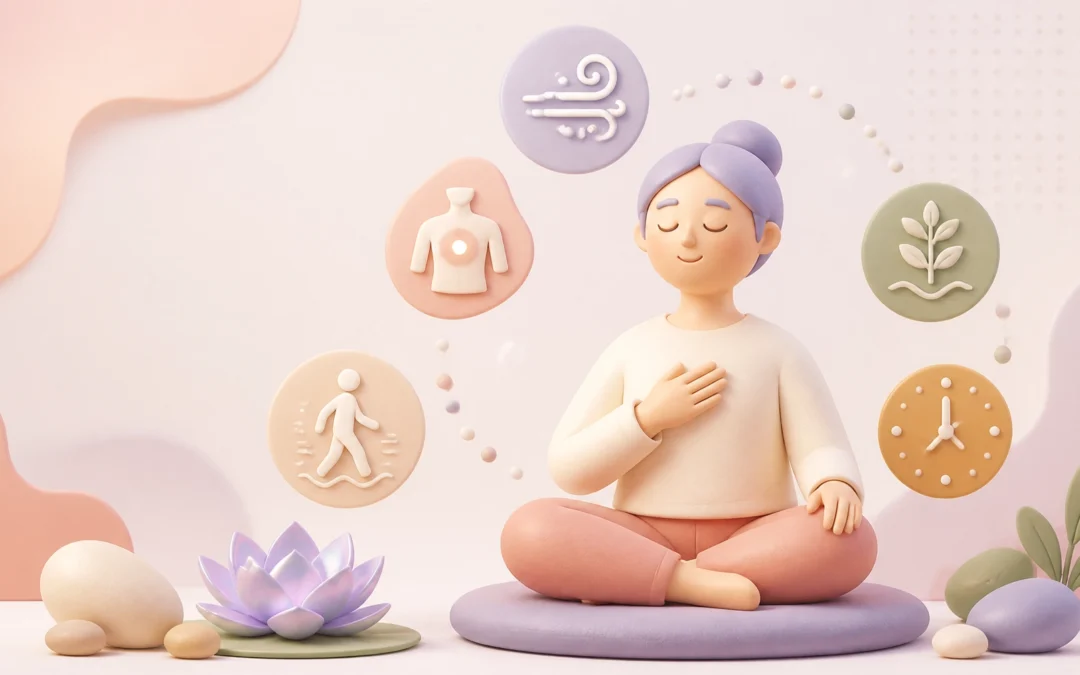
Featured image prompt: Create a premium wellness blog hero illustration in a soft-touch 3D claymorphism style. Show a calm, rounded human figure seated cross-legged in a simple mindfulness pose, with one hand near the chest and subtle floating symbols for breath, body awareness, walking, grounding, and a gentle clock suggesting five minutes. Use smooth organic volumes, matte and pearlescent finishes, muted pastel colors including dusty rose, soft lavender, warm ochre, cream, and sage, with a small iridescent lavender lotus accent. Add an airy high-key background with soft-edged geometric blobs and a subtle dot-grid pattern. Use gentle overhead ambient lighting, broad highlights, diffused shadows, a front-facing slightly angled perspective, and generous negative space. Do not include text, logos, or sharp edges.
Alt text: Rounded 3D figure practicing five-minute mindfulness with breath, body scan, walking, and grounding symbols
A consistent mindfulness practice does not require a long meditation session or a completely quiet schedule. Five intentional minutes can create a useful pause between a stressful moment and the next decision.
Mindfulness involves noticing present-moment thoughts, feelings, body sensations, and surroundings without immediately judging or changing them. This awareness can support stress management, emotional regulation, movement, and recovery. It can also make daily habits easier to observe within a broader personalized wellness plan.
The following practices can be completed at home, at work, outdoors, or during a daily transition. Select one practice and repeat it consistently before adding more.
Why Five Minutes of Mindfulness Can Be Useful
Brief mindfulness practices are designed to be practical. They can be repeated throughout the day and attached to habits that already exist, such as waking up, taking a lunch break, or preparing for sleep.
Research indicates that mindfulness may support mental well-being by helping people notice unhelpful thought patterns earlier. The NHS guidance on mindfulness notes that present-moment awareness can help individuals recognize stress and anxiety and relate to thoughts as temporary mental events.
Research on brief mindfulness interventions also reports promising effects on stress and state anxiety, although outcomes vary by person, practice, and consistency. Mindfulness should be viewed as one supportive habit rather than a replacement for medical or mental health care.
A five-minute practice may help to:
- Create a clear transition between tasks.
- Reduce automatic reactions during stressful moments.
- Improve awareness of muscle tension, fatigue, or restlessness.
- Support a calmer approach to movement and daily activities.
- Provide information for refining a personalized wellness plan.
A Simple Five-Minute Mindfulness Routine
Use the following structure when a complete practice is needed.
- Minute one: Notice the body and current surroundings.
- Minutes two and three: Complete breathwork or a body scan.
- Minute four: Practice mindful movement or sensory grounding.
- Minute five: Record the experience and identify the next supportive action.
The practice does not need to feel perfectly calm. The goal is to return attention to the present moment whenever distraction occurs.
1. Practice Focused Breathwork

Focused breathing is one of the most accessible ways to begin a short mindfulness session. Attention is directed toward the physical sensations of breathing rather than toward changing every thought.
How to practice
- Sit or stand in a stable, comfortable position.
- Relax the shoulders and allow the jaw to soften.
- Inhale slowly through the nose.
- Exhale gently and allow the exhale to last slightly longer than the inhale.
- Repeat for one to five minutes.
- When attention wanders, return to the movement of the breath.
A simple pattern is to inhale for four counts and exhale for six counts. Breath holding is not required. If counting creates tension, return to natural breathing.
Use this practice before opening email, entering a meeting, beginning exercise, or responding to a difficult message. The brief pause can make the transition more deliberate.
Safety note: Stop any breathing exercise that causes dizziness, discomfort, or increased anxiety. Return to normal breathing and seek professional guidance if needed.
2. Complete a One-Minute Body Scan

A body scan directs attention through different areas of the body. It is not a test of flexibility or relaxation. It is an opportunity to notice sensations before they become more difficult to manage.
How to practice
- Sit, stand, or lie down in a comfortable position.
- Begin with the feet and gradually move attention upward.
- Notice pressure, warmth, coolness, tingling, tightness, or ease.
- Check the calves, thighs, abdomen, chest, shoulders, hands, neck, and face.
- Avoid labeling sensations as good or bad.
- Finish by noticing the whole body for several breaths.
The scan can be shortened to three areas when time is limited:
- Feet and legs: Notice contact with the floor.
- Shoulders and jaw: Identify areas of held tension.
- Breath and chest: Observe the rhythm without forcing it.
This practice can be especially useful after prolonged sitting, during a work break, or before sleep. Body awareness may also make it easier to choose an appropriate next step, such as stretching, drinking water, taking a walk, or resting.
For more information about the relationship between rest and well-being, review why quality sleep supports mental and physical wellness.
3. Use Mindful Walking

Mindfulness does not require sitting still. Walking can provide a structured way to connect attention with physical activity.
How to practice
- Walk at a natural or slightly slower pace.
- Notice the heel, sole, and toes as each foot contacts the ground.
- Observe the movement of the legs, hips, and arms.
- Pay attention to nearby sounds, colors, light, and temperature.
- When thoughts move toward the past or future, return attention to the next step.
A two-minute mindful walk can take place in a hallway, around a building, or during a regular outdoor route. Avoid using the practice near traffic or in any setting that requires divided attention.
Mindful walking can be combined with an activity entry in a healthy lifestyle tracker. Record the duration, setting, energy level, and mood before and after the walk. This creates a more complete view of how movement and mindfulness interact.
4. Apply the 5-4-3-2-1 Grounding Method
Grounding shifts attention from repetitive thoughts to immediate sensory information. It can be useful during periods of worry, overstimulation, or mental fatigue.
How to practice
Identify:
- Five things that can be seen.
- Four things that can be felt through touch.
- Three things that can be heard.
- Two things that can be smelled.
- One thing that can be tasted.
The exercise can be completed in less than five minutes. Use specific descriptions rather than general labels. For example, identify “a cool glass surface” instead of simply “a glass.”
Grounding does not eliminate the source of stress. It provides a temporary point of focus and may help create enough space to select a constructive response.
5. Add a Micro-Meditation to Daily Transitions

A micro-meditation is a short pause that can be completed in 10 seconds to two minutes. It is useful when a full five-minute session is not possible.
Try the following STOP sequence:
- Stop: Pause the current activity.
- Take a breath: Complete one slow, comfortable breath.
- Observe: Notice thoughts, emotions, and physical sensations.
- Proceed: Select the next action with greater awareness.
Other micro-meditation options include:
- Name the current emotion without trying to suppress it.
- Notice three sounds in the environment.
- Feel both feet on the floor.
- Observe one full inhale and exhale.
- Identify one task that deserves focused attention.
- Relax the hands, shoulders, and facial muscles.
Place micro-meditations at predictable transition points. Examples include unlocking a phone, entering a car, starting a workout, sitting down to eat, or turning off a computer.
How to Build Mindfulness Into a Personalized Wellness Plan
Consistency is more important than creating an elaborate routine. Use a holistic wellness app to connect mindfulness with nutrition, activity, sleep, journaling, and recovery data.
Start with one daily anchor:
- Practice breathwork after waking.
- Complete a body scan after lunch.
- Take a mindful walk during an afternoon break.
- Use grounding before a demanding task.
- Complete a micro-meditation before bedtime.
Track only the information that will be useful. A simple entry may include:
- Practice selected.
- Duration.
- Mood before the practice.
- Mood after the practice.
- Physical sensations noticed.
- One follow-up action.
The Wholistic Wellness Tracker includes guided meditations, journaling, activity tracking, and sleep and recovery features. These tools can help mindfulness remain connected to the wider pattern of daily habits rather than becoming an isolated activity.
An ai health coach app can also help identify patterns in logged routines and provide personalized guidance. Use these suggestions as prompts for reflection, not as a substitute for qualified professional advice.
Common Barriers and Practical Adjustments
“The mind will not stop.”
Mindfulness is not the removal of thoughts. Notice the thought, label it briefly, and return attention to the breath, body, or surroundings.
“There is not enough time.”
Begin with one breath or a 30-second body check. Short practices can be repeated during existing transitions.
“Sitting still feels uncomfortable.”
Use mindful walking, gentle stretching, or sensory grounding instead.
“The practice increases distress.”
Stop if the exercise causes significant discomfort. Open the eyes, orient to the room, return to natural breathing, and use appropriate professional support.
Summary
Five-minute mindfulness practices can support a more aware and balanced daily routine. Focused breathwork creates a deliberate pause. Body scans improve awareness of physical sensations. Mindful walking connects attention with movement. Grounding redirects attention to the present environment. Micro-meditations make mindfulness available during ordinary transitions.
The strongest results typically come from regular practice rather than occasional long sessions. Begin with one method, record the response, and adjust the routine as needed within a broader approach to mental and physical wellness.
Open the Wholistic Wellness Tracker app, complete one five-minute mindfulness practice today, and log your progress to support a healthier daily pattern.